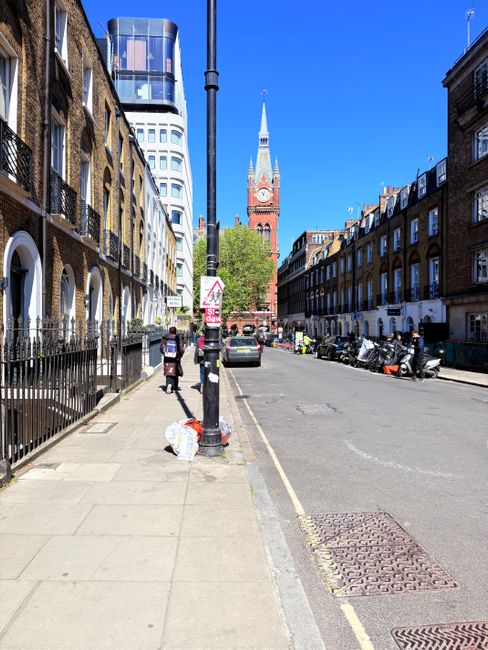
Euston Road guide to rubbish removal booking Kings Cross
If you are trying to clear a flat, office, or awkward pile of mixed waste near Euston Road or Kings Cross, the process can feel annoyingly time-sensitive. Traffic, loading bays, stairs, tight hallways, and neighbours who would rather not hear furniture being dragged at 7am... it all adds up. This Euston Road guide to rubbish removal booking Kings Cross is designed to make the whole thing simpler. You will see how booking usually works, what to check before you confirm, what types of waste are commonly handled, and where people often trip up.
Whether you are arranging a one-off clearance after a move, dealing with builders waste, or just reclaiming space from old furniture and clutter, the goal is the same: book the right service, avoid surprises, and get the job done cleanly. Let's keep it practical.
Table of Contents
- Why Euston Road guide to rubbish removal booking Kings Cross Matters
- How Euston Road guide to rubbish removal booking Kings Cross Works
- Key Benefits and Practical Advantages
- Who This Is For and When It Makes Sense
- Step-by-Step Guidance
- Expert Tips for Better Results
- Common Mistakes to Avoid
- Tools, Resources and Recommendations
- Law, Compliance, Standards, or Best Practice
- Options, Methods, or Comparison Table
- Case Study or Real-World Example
- Practical Checklist
- Conclusion
- Frequently Asked Questions
Why Euston Road guide to rubbish removal booking Kings Cross Matters
Rubbish removal around Euston Road and Kings Cross is not just about getting rid of "stuff". It is about doing it without causing a disruption, without overpaying for the wrong type of service, and without ending up with waste sitting in your hallway for another week. In a busy part of London, the small details matter: access, timing, parking, and the sort of waste you actually have.
That is especially true in older buildings and mixed-use streets. A simple clearance can become awkward fast if you have no lift, limited kerb space, or a landlord who wants everything removed before the end of the day. In our experience, the smooth jobs are almost always the ones where the customer has thought ahead by just a little. Not obsessively. Just enough.
It also matters because different waste streams need different handling. A sofa is not the same as rubble. A fridge is not the same as office paper. And hazardous items should never be treated as an afterthought. Choosing a service that understands those differences saves time and helps avoid compliance headaches later on.
Expert summary: The best rubbish removal booking is the one that matches your waste type, access conditions, and timing needs before the van even arrives. That is the real shortcut.
How Euston Road guide to rubbish removal booking Kings Cross Works
At a basic level, rubbish removal booking is straightforward. You describe what needs to go, the provider estimates the load or visits to assess it, you agree a price or booking window, and the team removes the items. Simple enough. The catch is that "simple" depends on whether your clearance is a few bags, a full flat, or a mixed pile of bulky items and construction debris.
Most good bookings follow a similar pattern:
- Initial enquiry: You explain what you need removed, where the property is, and how quickly you need it done.
- Assessment: You may be asked for photos, a rough list, or a description of the waste.
- Quote or estimate: A price is given based on volume, weight, labour, and any special handling.
- Booking confirmation: A time slot is arranged, sometimes same-day or next-day if capacity allows.
- Collection day: The team arrives, loads the waste, and clears the area.
- Sorting and disposal: Reusable or recyclable items are separated where possible, and the waste is taken to the appropriate facility.
If you need a broader service than a one-off load-out, it can help to understand the difference between general waste removal and more specific clearance work such as flat clearance, house clearance, or office clearance. The right choice usually becomes obvious once you know how much labour and sorting is involved.
Key Benefits and Practical Advantages
People usually start with rubbish removal because they need space back, but the real benefits go further than that. A decent booking can reduce stress, save a lot of manual lifting, and keep a property moving toward its next stage. If you are dealing with a move-out, renovation, or end-of-tenancy deadline, that can be the difference between an easy finish and a messy scramble.
- Speed: Good services can often work around tight schedules, which matters on busy London streets.
- Less physical strain: Heavy lifting is handled by people used to awkward stairwells and bulky items.
- Cleaner final result: Proper clearance usually leaves the area ready for cleaning, decoration, or handover.
- Better sorting: Reusable items, recyclable materials, and special waste can be separated more sensibly.
- Fewer admin headaches: A single booking is often easier than arranging multiple trips to a disposal site.
There is also a quieter benefit that people do not always mention: momentum. Once the rubbish is gone, the whole property tends to feel more manageable. The job stops living in your head. That matters more than it sounds like it should.
Who This Is For and When It Makes Sense
This guide is useful for a wide mix of people. Some are moving out of a flat near Kings Cross. Some are clearing a property after a tenant leaves. Some are tradespeople finishing a job and need builders waste gone before the next stage starts. Others just have a garage, loft, or spare room that has quietly become a storage problem.
Rubbish removal booking makes sense when:
- you have bulky waste that will not fit in normal bins
- you need fast turnaround rather than multiple council trips
- you are clearing items from upper floors or a building with difficult access
- you have mixed waste and do not want to sort it all yourself
- you need help with items that need special disposal handling
- you want one team to remove, load, and take everything away in a single visit
If the job includes furniture, it may be worth looking at furniture clearance or furniture disposal. For older mattresses and larger sofas, mattress and sofa disposal can be the more sensible route. And if a fridge, freezer, or washing machine is involved, the proper fridge and appliance removal service is usually the safer bet.
Step-by-Step Guidance
If you want a smooth booking, do the prep before you pick up the phone or fill in an online form. A few minutes of organisation can save a surprisingly annoying amount of back-and-forth later.
1. Identify exactly what needs removing
List the waste by type. Start with the obvious bulky items, then add bagged waste, cardboard, broken furniture, or odd bits from cupboards and storage. Be honest here. "Just a few things" has a habit of becoming half a van.
2. Check access conditions
Note stairs, lifts, parking restrictions, loading bays, narrow entrances, and any time windows that apply to your building. On roads like Euston Road, access can matter as much as the waste itself. If your building has awkward entry points, mention them early.
3. Decide whether the waste is general, bulky, or specialist
General household waste is one thing. Builders rubble, electricals, confidential papers, and hazardous items need more care. If you are not sure, say so. It is much better to ask than to guess.
4. Gather photos or a clear description
Photos help a lot. A quick set from different angles can make quotations far more accurate. That means fewer awkward surprises on the day, which everyone prefers.
5. Compare quote style as well as price
Some bookings are priced by volume, some by item type, and some by labour plus disposal. Do not focus only on the headline number. Ask what is included, what counts as extra, and whether there are limits for stairs, heavy items, or access delays.
6. Confirm the timing
Get the slot clear in your head. Same-day bookings are brilliant when they work, but they are not always necessary. If you are clearing after an inventory check or before decorators arrive, a precise arrival window can be more useful than a vague "sometime today".
7. Prepare the space
Move smaller items together if you can. Keep pathways open. Separate anything you definitely want to keep. If a team is working fast, clear instructions at the start make the whole thing calmer.
8. Ask about disposal and recycling
Good operators should be able to explain how the waste is handled. You do not need a lecture. Just a clear answer about sorting, recycling, and any special disposal requirements. That alone tells you a lot.
Expert Tips for Better Results
Here are the little things that make a booking go more smoothly. They are not flashy, but they matter.
- Book earlier than you think you need to. On busy days, especially around moves and end-of-month traffic, a little lead time helps.
- Be precise about volume. "A few bags and a wardrobe" is better than "some rubbish".
- Tell the provider about awkward items. Heavy cabinets, wet plaster, broken glass, and white goods all change the job.
- Keep valuables and documents separate. It sounds obvious, but people are rushing and things get mixed up.
- Ask what happens if access changes. A tiny detail, such as no parking space or a locked gate, can shift the plan.
- Use disposal-specific pages when the waste is niche. For example, builders waste is different from household clutter, and that difference affects how the job is priced and loaded.
One practical tip from real-world clearances: if the job involves multiple room types, photograph each room separately. It sounds minor. It really is not. It can stop confusion and keep the booking accurate without anyone needing to play detective.
And yes, if you are standing in a room full of broken chairs and old boxes at 8:15 in the morning, it may feel slightly ridiculous to be talking about "planning". Still, planning saves money. Annoying but true.
Common Mistakes to Avoid
Most problems with rubbish removal booking are preventable. The biggest mistake is under-describing the job. The second biggest is assuming every removal service handles the same materials in the same way. They do not.
- Underestimating the load: A small pile can grow quickly once everything is pulled out of cupboards, cupboards, and the dreaded "miscellaneous" corner.
- Not mentioning special items: Refrigerators, mattresses, paint, chemicals, and rubble need proper handling.
- Forgetting access issues: No parking, tight staircases, or concierge rules can delay the collection.
- Leaving everything to the last minute: Rushed bookings can be more expensive and more stressful.
- Assuming all waste can go together: Mixed waste is common, but certain items need separate treatment.
- Not checking payment and quote terms: A clear booking is better than a cheap-looking one with vague extras.
Another trap is treating every clear-out like a bin day. That is how people end up with damaged furniture in the hallway and nowhere to go with it. Better to slow down just a touch and sort the job properly.
Tools, Resources and Recommendations
You do not need specialist kit to arrange rubbish removal, but a few simple tools make the process easier. A phone camera, a notes app, and a quick room-by-room list can do most of the heavy lifting before the team even arrives.
Useful things to have ready:
- a rough inventory of items
- photos of bulky waste and access points
- measures for especially large items if you know them
- building access details, including buzz codes or loading restrictions
- a clear idea of what must stay and what must go
For certain jobs, the website's supporting pages can also help you understand the service better. If you are comparing pricing or want to know how quotes are formed, the pricing and quotes page is a sensible place to start. If you are concerned about how payments are handled, the payment and security page offers useful reassurance. And if sustainability matters to you, the recycling and sustainability page explains the broader approach.
If you need to talk through something less standard, the contact-us page is there for direct questions, while the about-us page helps you understand the company background and approach. Simple enough, really.
Law, Compliance, Standards, or Best Practice
Rubbish removal in the UK sits within a wider framework of responsible waste handling. You do not need to become a compliance expert to book a clearance, but it helps to know the broad expectations. Waste should be collected, transported, and disposed of responsibly, and certain items require specific treatment. That is particularly relevant for electrical equipment, fridges, hazardous materials, and anything that could pose a health or safety risk.
As a customer, best practice is to be clear about what you are handing over. If you are unsure whether something counts as hazardous or specialist waste, say so before the booking is confirmed. That protects you, the team, and the property itself. It also helps avoid the awkward moment when a hidden tin of old paint turns up right at the end. Nobody wants that surprise.
For business customers, this matters even more. Offices, retail units, and managed spaces often have additional procedures around access, documentation, and aftercare. If your booking involves commercial waste, business waste removal may be the better fit than a general domestic clearance.
Health and safety is another practical concern, not just a policy word. Heavy lifting, broken items, dust, sharp edges, and stairwells all introduce avoidable risks. A service with a clear health and safety policy and appropriate insurance and safety practices gives you a better foundation for a trouble-free visit.
For items that are sensitive or personal, there are also specialist handling needs. That is where confidential shredding can be relevant, particularly for papers, records, and disposal with privacy concerns. It is one of those things people forget until the last minute.
Options, Methods, or Comparison Table
There is more than one way to clear rubbish near Euston Road and Kings Cross. The best method depends on what you are clearing, how quickly it needs to go, and how much lifting you can realistically do yourself.
| Option | Best for | Pros | Watch out for |
|---|---|---|---|
| Booked rubbish removal | Bulky, mixed, or urgent waste | Fast, convenient, labour included | Quote accuracy depends on good descriptions |
| Skip-style approach | Consistent waste from one location | Good for ongoing projects | Access, permits, and loading limits may apply |
| Specialist item disposal | Fridges, mattresses, appliances, sofas | Better handling for awkward items | Not always suitable for mixed loads |
| Room-by-room clearance | Flats, houses, lofts, garages | More organised, often quicker overall | Needs a clearer brief and a bit more planning |
If you are unsure which route fits, compare the waste type first and the price second. That order matters. A cheaper option can become expensive if it is the wrong fit for the access or the waste mix.
For people deciding between a container-based route and a collected load, the page on what can go in a skip is useful background reading. It helps set expectations around what sorts of materials are appropriate for different disposal methods.
Case Study or Real-World Example
Picture a two-bedroom flat just off Euston Road. The occupant is moving out on Friday, decorators are due Monday, and the spare room has become a storage graveyard: an old bed base, two chairs, broken boxes, a fan that stopped working sometime in winter, and a few bags of mixed junk from the kitchen. Nothing dramatic. Just enough to make the place feel unfinished.
The first instinct is often to push everything into the middle of the room and hope it will sort itself out. It won't. So the better approach is to split the job into categories: furniture, bagged waste, electrical items, and anything questionable. Photos are taken. Access is checked. The booking notes mention stairs, no lift, and a narrow entrance behind the building.
On the day, the team knows exactly what to expect. The removal is quicker, the quote remains accurate, and the flat is left ready for a final clean. No drama. No arguing over what fits. No wandering around looking for the one missing mattress that turned out to be behind a wardrobe. Honestly, that last bit happens more often than you would think.
The outcome is not just a cleaner flat. It is peace of mind. The kind you feel when you lock the door and think, finally, that is done.
Practical Checklist
Use this before you confirm your booking. It is short, but it covers the important bits.
- List all waste clearly, including bulky items and bags
- Separate general rubbish from furniture, appliances, and special waste
- Take photos from a few angles
- Check stairs, lifts, parking, and entrance access
- Identify anything fragile, sharp, wet, or potentially hazardous
- Decide what must be removed first if time is tight
- Ask how pricing is calculated
- Confirm the collection window and any access instructions
- Keep valuables, documents, and personal items out of the clearance area
- Choose a service that matches the real waste type, not the hoped-for one
Small checklist, big difference. That is the truth of it.
Conclusion
Booking rubbish removal near Euston Road and Kings Cross does not have to be complicated. The key is to be accurate about what needs collecting, realistic about access, and clear about timing. Once those basics are in place, the rest tends to move quickly and with far less stress than people expect.
If your job is a simple load of mixed rubbish, a bulky furniture clear-out, or something more specific like appliances or builders waste, the smartest move is to match the service to the waste. That way you avoid overcomplicating the job, and you are far less likely to run into awkward surprises on collection day.
Get a free quote today and see how much you can save.
And if you are still staring at the pile wondering where to begin, start with the photos. That tiny first step often turns the mess into a plan. Which, to be fair, is half the battle.
Frequently Asked Questions
How do I book rubbish removal near Euston Road and Kings Cross?
Start by listing the items you want removed, noting any access issues, and sending clear photos if possible. A good booking usually begins with a short description, then a quote or estimate, followed by a collection time.
What types of waste can usually be removed?
Common removals include household rubbish, furniture, mixed junk, appliances, loft contents, garage clutter, and builders waste. Some items need specialist handling, so it is worth mentioning anything unusual early.
Is same-day rubbish removal available?
It can be, depending on availability and the size of the job. Same-day work is most realistic when the waste is described clearly and access is straightforward.
How is rubbish removal priced?
Pricing is often based on the amount of waste, labour required, access difficulty, and whether any special handling is needed. The most accurate quote usually comes from photos or a detailed description.
Do I need to sort everything before the team arrives?
Not always. Mixed waste is common. Still, separating obvious categories like furniture, bags, electricals, and specialist items helps the process move faster and keeps the quote more accurate.
What if I have a fridge, mattress, or sofa to dispose of?
These items are best mentioned upfront because they can require separate handling. Pages like fridge and appliance removal and mattress and sofa disposal can help clarify the service needed.
Can rubbish removal help with a flat clearance?
Yes. In fact, flat clearances are one of the most common reasons people book collection services. If your job involves multiple rooms or an entire property, flat clearance is often the relevant option.
What should I tell the provider before booking?
Tell them what the waste is, how much there is, whether there are stairs or lifts, if parking is limited, and whether any items are heavy or hazardous. Clear information up front avoids hassle later.
Is commercial waste different from household rubbish removal?
Usually, yes. Offices and business premises can have different access arrangements, compliance needs, and waste streams. For those jobs, business waste removal is often more suitable.
What happens to the waste after collection?
It is normally sorted for disposal, recycling, or specialist treatment depending on the material. If sustainability matters to you, the recycling and sustainability page is a useful reference point.
Do I need to be present for the collection?
Often yes, especially if access is tricky or the team needs you to confirm what goes and what stays. In some cases, arrangements can be made differently, but it is best to confirm that in advance.
What is the biggest mistake people make when booking?
The biggest mistake is under-describing the job. People underestimate the volume, forget a few heavy items, or leave out access details. That is how quotes become awkward. A little honesty early on saves everyone time.
For a smoother experience, explore the site's supporting pages such as pricing and quotes, payment and security, and contact-us if you need to ask something specific before booking. Sometimes a quick question is all it takes to turn a messy task into an easy one.